




Small Businesses: Buy Inland Marine Insurance Without Broker Fees

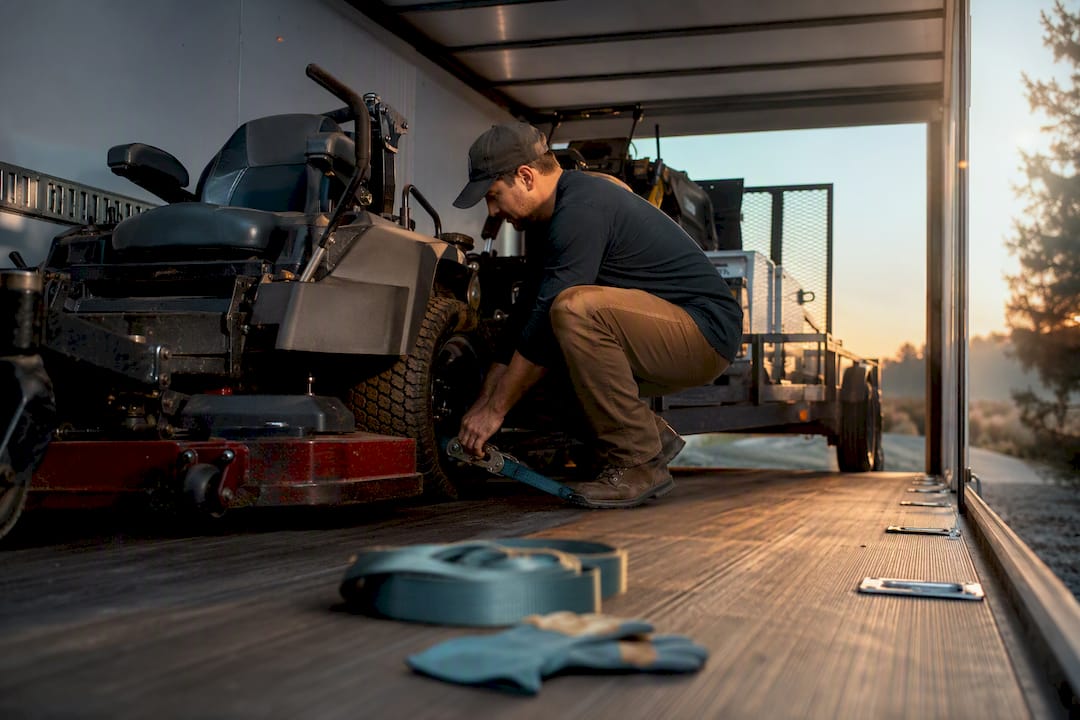
Inland marine insurance is coverage for business property that moves, travels, or sits at a location you don’t own. If your tools ride in a truck, your inventory ships to customers, or your equipment sits on a job site or at a trade show, standard property insurance likely won’t pay when something goes wrong. Inland marine fills that gap.
TL;DR:
Inland marine insurance is essential if your valuable equipment or inventory frequently leaves your main premises or is stored temporarily off-site.
It offers coverage for theft, damage during transit, collision, and accidental breakage, which are common risks for mobile property.
The policy type should match your specific needs, such as contractor’s equipment floaters or motor truck cargo, depending on what you transport or store.
Choosing between scheduled and blanket limits impacts your premium and payout, with replacement cost offering the most accurate valuation after a loss.
Conducting a detailed inventory before buying and working with an independent broker can help you secure appropriate, cost-effective inland marine coverage.
Table of Contents
What Inland Marine Insurance Really Covers
The name is misleading. Inland marine insurance grew out of ocean marine coverage, back when insurers extended cargo protection from ships to trains and trucks carrying goods over land. Today it has nothing to do with boats for most small businesses. It’s first-party property coverage, meaning it pays you for damage to your own property rather than covering a claim someone else brings against you.
That distinction trips up a lot of business owners who assume “marine” means liability or shipping-only. It covers a wide range of perils tied to property that isn’t fixed in one building:
Theft of tools or equipment from a job site or vehicle
Fire or water damage to inventory in transit
Collision damage during shipping
Accidental drops, falls, or breakage while equipment is being moved or installed
Collisions and cargo theft rank among the most common causes of loss under these policies, which tells you where the real exposure sits: not on the shop floor, but on the road.
Does Your Business Actually Need It?
A landscaping crew with mowers and trailers, a photographer hauling cameras to weddings, a mobile mechanic, an event vendor setting up booths, a retailer shipping high-value electronics. All of these operations share one trait: their most valuable property doesn’t stay put.
A standard Business Owner’s Policy or Commercial Property Policy typically insures property tied to a fixed address. Once that same equipment leaves the building, coverage often thins out or disappears entirely. Inland marine insurance is built specifically for property that “floats,” a term the industry uses because coverage travels with the item regardless of where it sits.
Ask yourself these questions to gauge your exposure:
Do employees regularly transport tools, inventory, or equipment between locations?
Do you store customer property or expensive gear at job sites overnight?
Do contracts require you to carry specific coverage for equipment or materials?
Would a stolen laptop, camera, or piece of machinery set you back thousands of dollars?
Does your BOP exclude property once it leaves your premises?
Answer yes to two or more, and inland marine belongs on your radar.
Policy Types That Match Real Business Needs
Inland marine isn’t one policy. It’s a family of forms, each built around a specific kind of movable risk. Understanding which type fits your situation matters more than knowing the umbrella term.
Contractor’s equipment floater: covers owned or rented equipment like excavators, generators, or compressors, whether they’re on a job site, in transit, or in storage.
Installation floater: protects materials and equipment waiting to be installed, such as HVAC units or cabinetry sitting at a construction site before the job is finished.
Motor truck cargo: covers goods while they’re being hauled, relevant for businesses that operate their own delivery trucks.
Bailee’s customer coverage: protects customer property left in your care, think a dry cleaner holding garments or a repair shop holding a client’s laptop.
Fine art and exhibit coverage: fits galleries, museums, or vendors who transport valuable or fragile items to shows.
EDP (electronic data processing) coverage: covers computers, servers, and related equipment against a broader set of perils than typical property forms allow.
A photographer might schedule a single camera body worth $6,000 as a listed item, while a contractor with a dozen mid-range tools might prefer a blanket limit covering the whole toolkit.
What Drives Your Premium and Your Payout
Two decisions shape almost everything about how an inland marine policy performs when you file a claim: how you set your limits, and how the policy values a loss.
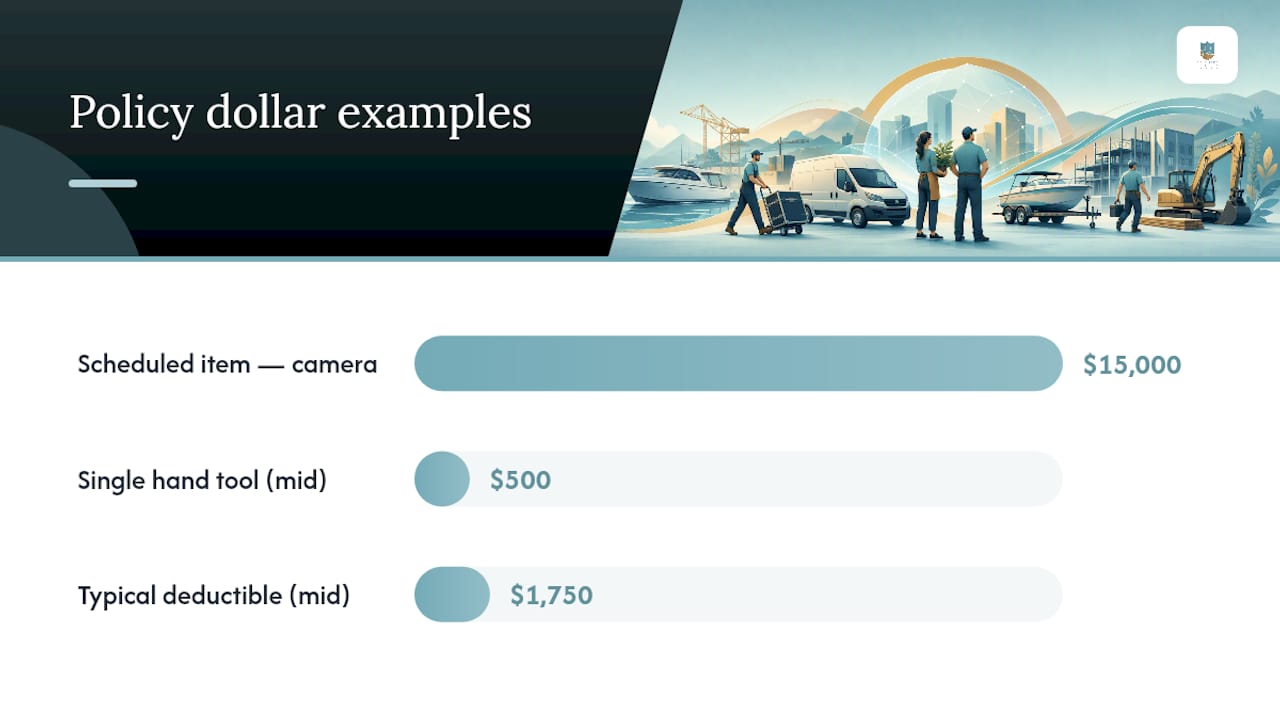
Scheduled versus blanket limits. A scheduled limit assigns a specific dollar amount to a specific item, useful for a $15,000 camera package or a single piece of specialty equipment. A blanket limit covers a group of similar items under one combined cap, which works better for a contractor with twenty hand tools worth $200 to $800 apiece.
Replacement cost versus actual cash value. Replacement cost pays what it takes to buy new equivalent property. Actual cash value subtracts depreciation, so a five-year-old generator might pay out at a fraction of what a new one costs.
Typical deductibles run $1,000 to $2,500, though carriers vary this widely based on item value and risk.
Raising your deductible lowers your premium, but only if you can comfortably absorb that amount out of pocket after a loss.
Where Coverage Stops: Exclusions and Add-Ons
Every inland marine policy has edges, and knowing where they are prevents a nasty surprise at claim time. Wear and tear isn’t covered. Neither is inherent vice, meaning a defect the item already had before the loss. Most policies also exclude flood and earthquake damage unless you add a specific endorsement, and carrier wordings vary considerably on exactly what counts.
Gradual deterioration or mechanical breakdown from normal use
Flood and earthquake, unless separately endorsed
Employee theft or dishonesty, in many standard forms
Damage to a vehicle itself, which falls under auto liability rather than motor truck cargo
Pro Tip: If you haul goods for other people, not just your own inventory, ask specifically about motor truck cargo versus your commercial auto policy. The two cover different things, and gaps between them are where a lot of uninsured losses happen.
How to Decide and Buy the Right Coverage
Work through this before you call an insurer:
Check transit frequency. How often does equipment or inventory leave your premises in a given month?
Tally total value. Add up what your mobile property is actually worth, not what you paid for it years ago.
Note offsite storage. Do items sit unattended overnight at a client site, warehouse, or storage unit?
Review contracts. Do any client agreements require proof of specific coverage limits?
Account for customer property. Do you ever hold items that belong to someone else?
When you talk to a broker, ask direct questions: What perils trigger a payout, and which are excluded? Is coverage scheduled or blanket, and which fits my inventory better? Does this policy pay replacement cost or actual cash value? Is this coverage primary, or does it sit behind my BOP?
Pro Tip: Bring an itemized list with serial numbers, purchase invoices, and photos before you request quotes. Insurers price faster and more accurately when they aren’t guessing at values.
Why a Broker Simplifies the Inland Marine Decision
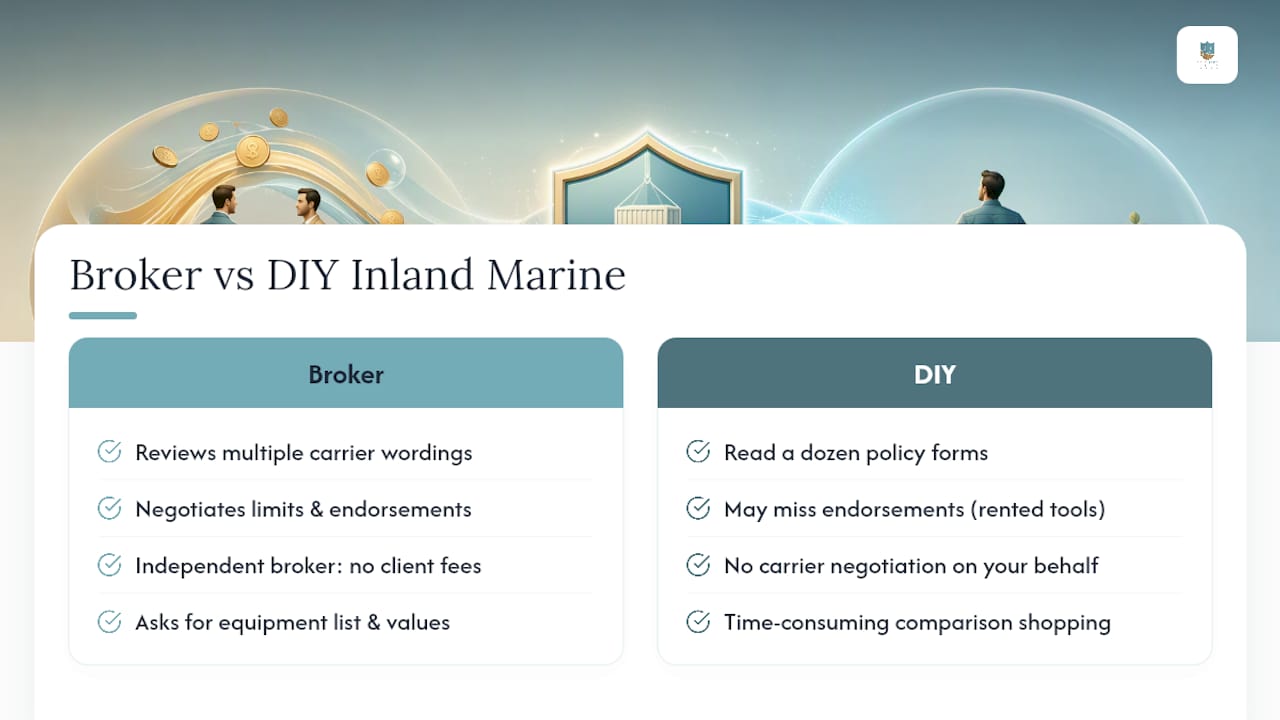
Carrier wordings on inland marine forms differ more than most business owners expect. One insurer’s contractor’s equipment floater might automatically include rented tools; another might require a separate endorsement. A broker reviews those differences across multiple carriers instead of you reading a dozen policy forms yourself, and negotiates limits and endorsements that match your actual exposure rather than a generic template.
An independent insurance brokerage shops coverage across multiple carriers with no broker fees charged to clients, which means comparison shopping doesn’t cost you anything extra. Expect to be asked for an equipment list, approximate values, and how often property travels. That’s the starting point for a real quote.
The Single Move Most Businesses Skip
Most small business owners underinsured mobile equipment simply because they’ve never inventoried it, a critical step outlined in this Prop Report on asset tracking. Walk your job sites, your vehicles, and your storage units, write down what’s actually out there and what it’s worth, then schedule the high-value items individually and blanket the rest. Get quotes once that list exists, not before.
— Andrew
Get an Inland Marine Quote Without the Broker Fees
An independent insurance brokerage is an alternative to shopping carriers one by one yourself: they compare inland marine coverage across multiple carriers, charge no broker fees, and handle the back and forth with underwriters so you’re not stuck reading policy wordings after hours.

Once you’ve inventoried your tools, vehicles, or job site equipment, we can match that list against carriers who actually price mobile-property risk well instead of treating it as an afterthought to your property policy. Bring your equipment list and approximate values, and we’ll build out quotes that fit how your business actually operates. Start on the business insurance page or go straight to request a business insurance quote to get pricing started this week.
Sources
For deeper policy-form definitions, the Triple-I overview of inland marine insurance covers core concepts and common perils. Investopedia’s breakdown of inland marine coverage walks through specific policy types and typical deductibles. IRMI’s glossary entry offers the clearest technical definition of “floater” coverage for readers who want precise industry language.
This article is general information, not a substitute for advice from a qualified financial advisor. Consult a qualified financial professional about your own circumstances before acting on anything here.
FAQ
What Does Inland Marine Insurance Cover?
It covers business property that moves or sits temporarily away from your main location, including tools, equipment, inventory in transit, and customer property left in your care.
Is Inland Marine Insurance Worth It?
It’s worth it if your business regularly transports, stores offsite, or is contractually required to insure equipment or inventory that a standard BOP wouldn’t cover once it leaves your premises.
What Does Inland Marine Insurance Not Cover?
It typically excludes wear and tear, inherent defects in the property itself, and most flood or earthquake damage unless you add a specific endorsement.
What Does Inland Marine Insurance Primarily Cover?
It primarily covers mobile and movable business property against perils like theft, collision, and fire while that property is in transit or temporarily off site, filling the gap standard commercial property policies leave open.
Recommended
Comments